archive-object-reference
REFERENCE : MTM.2016.0140.0403

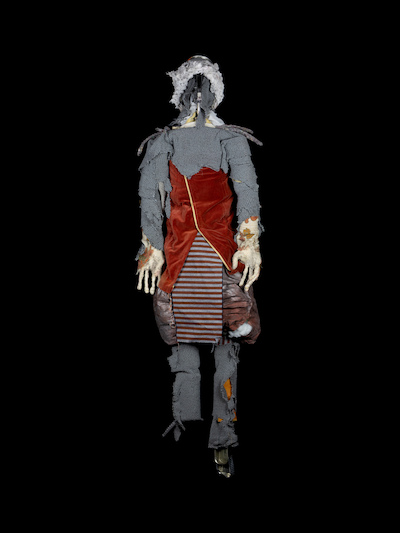
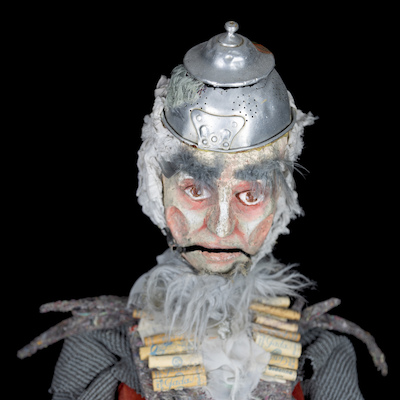

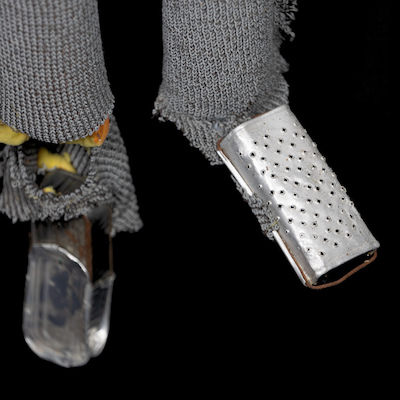
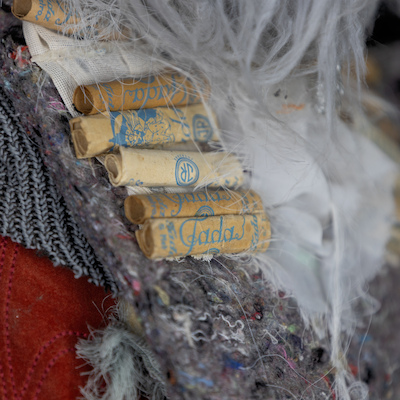

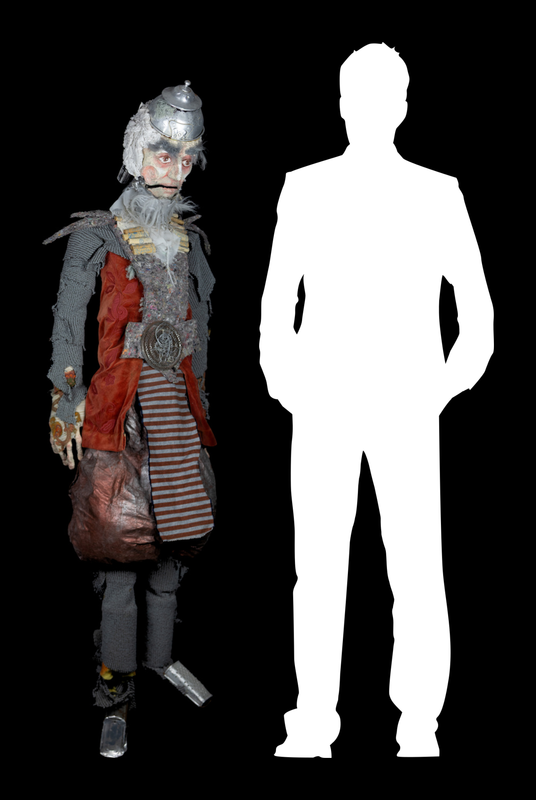
- OBJECT_HEIGHT : 1610 mm ( 5'3" in )
- OBJECT_WIDTH : 440 mm ( 1'5" in )
- OBJECT_LENGTH : 360 mm ( 1'2" in )
- OBJECT_WEIGHT : 3040 g ( 6.70 lb )
- OBJECT_REF : MTM.2016.0140.0403
- OBJECT_NAME_EN : D. Quixote
- EVENT_NAME_EN : COMPLAIN
- OBJECT_TYPOLOGY_EN : puppet / direct manipulation
- OBJECT_DATE : 2016
- OBJECT_STORAGE_REF : AA
OBJECT_MATERIAL_EN :
skeleton | woodbody/volume | sponge
head and hands | paper dough
hair | cotton, carpel
painting | acrylic paint
costume | various fabrics, paper, leather
joints | nylon tape
controller | expanded PVC
OBJECT_ARTISTS_EN :
- direction | Clara Ribeiro
- art direction | enVide neFelibata
- creation | enVide neFelibata
- built | enVide neFelibata, Migvel Tepes
- costume | Patrícia Costa
OBJECT_DESCRIPTION_EN :
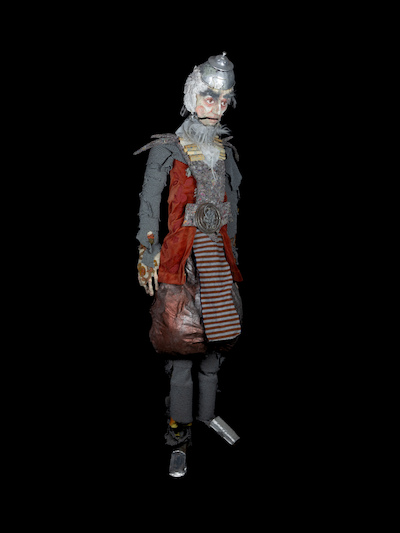
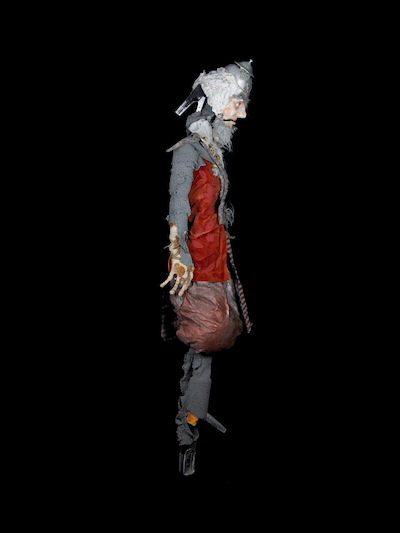
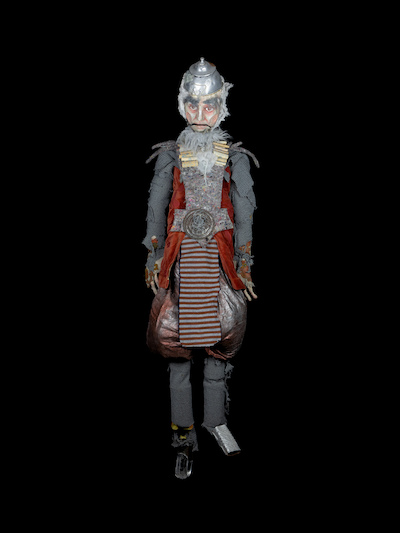
The central character in this show is a puppet built on a human scale, whose face symbolically comes from the mold of the face of the actress, Clara Ribeiro, who manipulates and voices it. The puppet's facial expressions and movements are crucial to convey humor and satire to the scene. Its expression leads us to believe that it is already dead or mad.
This puppet has a rigid internal structure, a skeleton, which allows for a real quality of manipulation, as it easily maintains positions that allow it to appear alive, although at times it is not manipulated.
It has a mechanism for manipulating the head, with a trigger that allows the mouth to open and close. This mechanism fits into the wheelchair, his horse Rocinante, in which he moves. He moves around the stage in a wheelchair, emphasizing the weakness of the character himself, who is at the end of his life, and allowing the manipulator to be partially hidden when manipulating the puppet. In this way, the audience concentrates on the puppet, reinforcing the belief necessary for a puppet to have life on stage.
OBJECT_CONTEXT_EN :
Performed in 1733, “The Life of the Great Don Quixote de la Mancha and the Fat Sancho Panza” was António José da Silva's first play, “The Jew”. An ironic interpretation of the play criticizes justice and the “walls” that Europe erects.