archive-object-reference
REFERENCE : MTM.2016.0140.0231

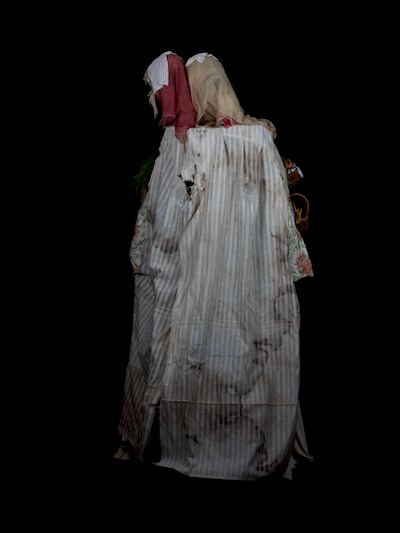
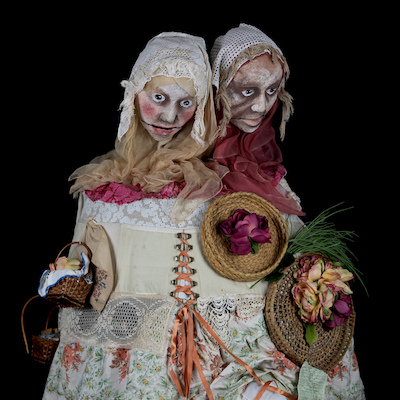
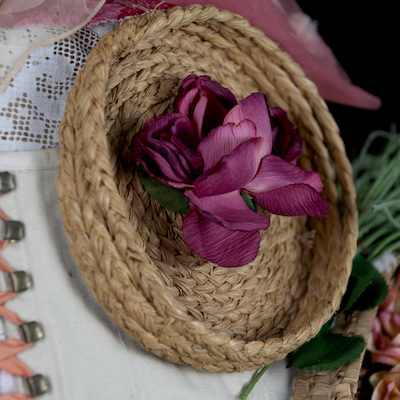
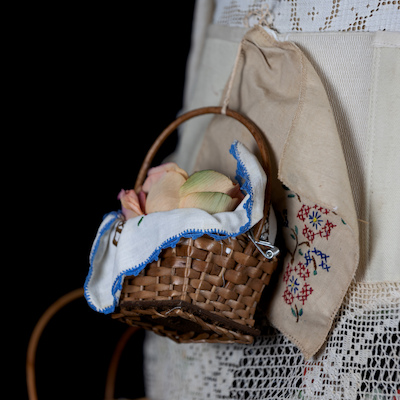


- OBJECT_HEIGHT : 1750 mm ( 5'8" in )
- OBJECT_WIDTH : 880 mm ( 2'10" in )
- OBJECT_LENGTH : 710 mm ( 2'3" in )
- OBJECT_WEIGHT : 6580 g ( 14.51 lb )
- OBJECT_REF : MTM.2016.0140.0231
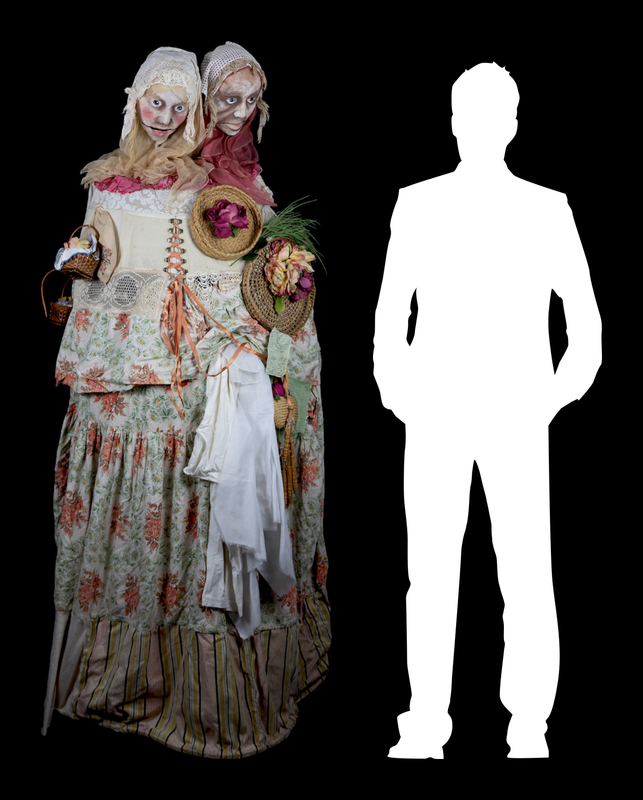
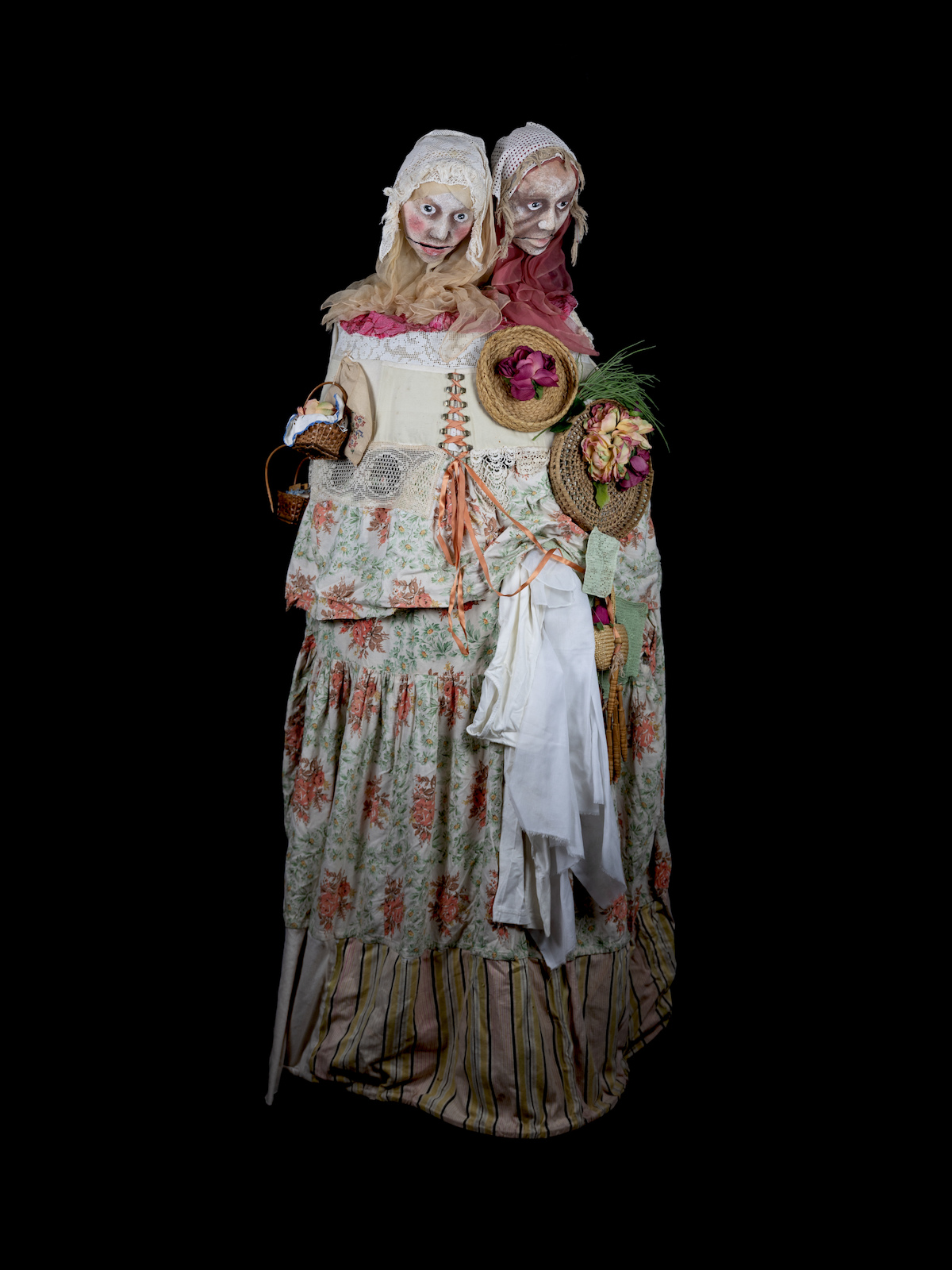
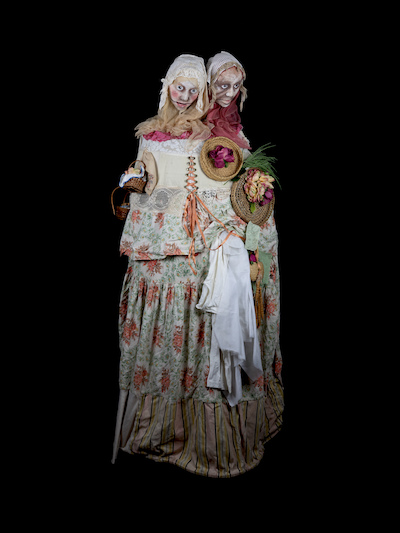
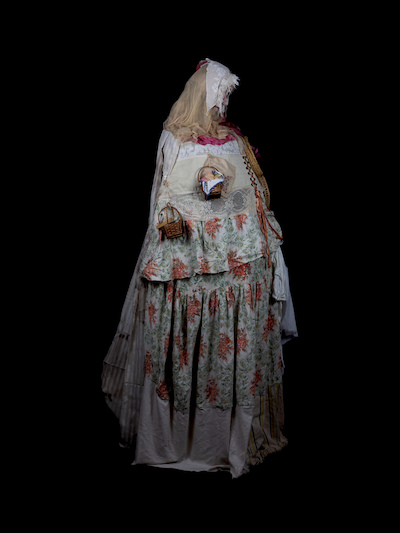
- OBJECT_NAME_EN : Sancha and Sanchita
- EVENT_NAME_EN : COMPLAIN
- OBJECT_TYPOLOGY_EN : puppet / direct manipulation / body puppet
- OBJECT_DATE : 2016
- OBJECT_STORAGE_REF :
OBJECT_MATERIAL_EN :
body/volume | metal meshhead | paper dough
hair | fabric
details | basketry, plastic foliage
painting | acrylic paint
costume | various fabrics
joints | steel spring neck
OBJECT_ARTISTS_EN :
- direction | Clara Ribeiro
- art direction | enVide neFelibata
- creation | enVide neFelibata, Migvel Tepes
- built | enVide neFelibata, Migvel Tepes
- costume | Patrícia Costa
OBJECT_DESCRIPTION_EN :
This puppet it's made up of two heads, and a metal structure underneath a fabric that defines the puppet's body.
It represents the characters Sancha and Sanchita, mother and daughter, as if they were siamese, since they are based on the same body. The two-headed design is a symbolic representation, since in the text they complete each other's sentences and are satirical of their husband and father Sancho Panza. It also symbolizes their deep attachment and independence, as well as the repetition of social roles.
The manipulator is inside the puppet, with the weight of the puppet culminating in a helmet for the manipulator to support the puppet. The puppeteer controls the heads and mouths of the characters with his hands, and when the figures don't speak, the manipulator's arms appear as the character's arms. The manipulation of the heads and body requires a balance between weight distribution, control mechanisms and the puppeteer's dexterity.
OBJECT_CONTEXT_EN :
Performed in 1733, “The Life of the Great Don Quixote de la Mancha and the Fat Sancho Panza” was António José da Silva's first play, “The Jew”. An ironic interpretation of the play criticizes justice and the “walls” that Europe erects.