archive-object-reference
REFERENCE : MTM.2016.0140.0115


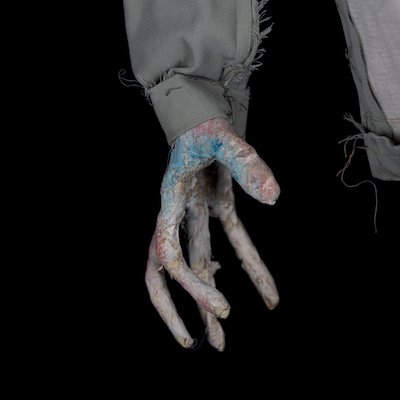


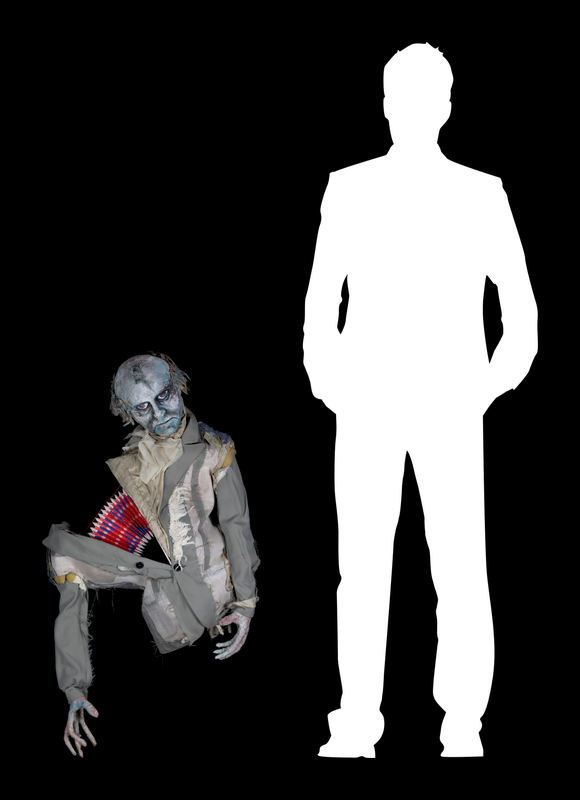
- OBJECT_HEIGHT : 970 mm ( 3'2" in )
- OBJECT_WIDTH : 540 mm ( 1'9" in )
- OBJECT_LENGTH : 250 mm ( 0'9" in )
- OBJECT_WEIGHT : 3170 g ( 6.99 lb )
OBJECT_MATERIAL_EN :
skeleton | woodbody/volume | sponge
head and hands | paper dough
hair | carpel
details | concertina insert
painting | acrylic paint
costume | various fabrics
joints | nylon tape
OBJECT_ARTISTS_EN :
- direction | Clara Ribeiro
- art direction | enVide neFelibata
- drawing | enVide neFelibata
- built | enVide neFelibata, Migvel Tepes
- costume | Patrícia Costa
OBJECT_DESCRIPTION_EN :
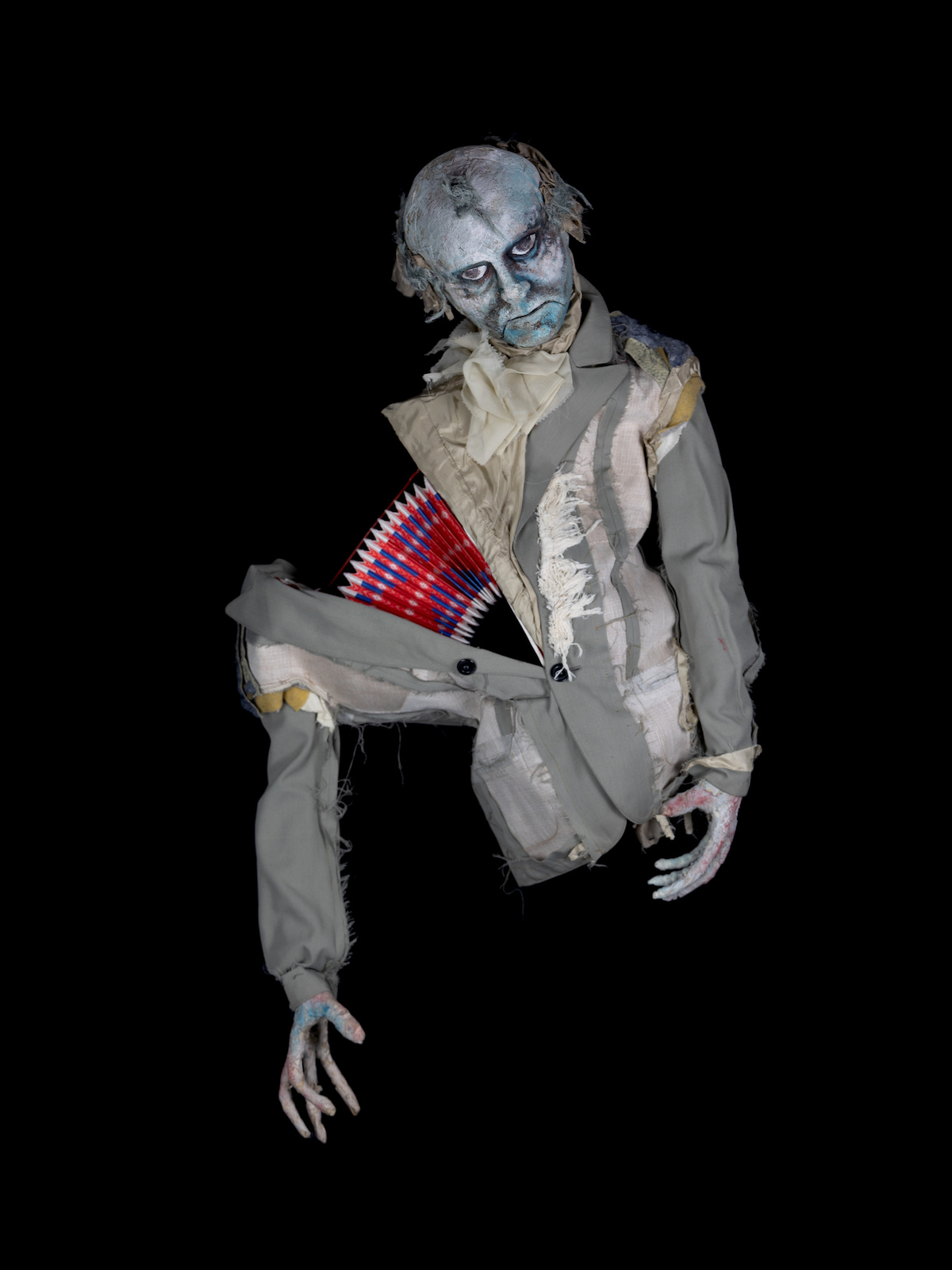
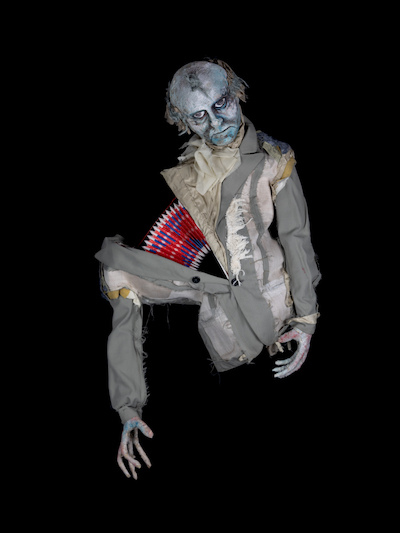
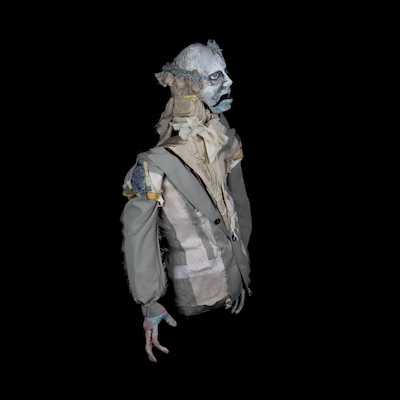
In the play, this character, called “Dead Man”, is given exceptional treatment by Governor Sancho Panza - at least when compared to the other complaining characters. The “Dead Man” claims to have been cut in half by the kick of a donkey, which caused his death. Because the donkey is owned by Governor Sancho Panza, he favors the sentence and orders that the plaintiff be given his soul back so that he can make a statement.
The direct manipulation puppet with a mouth mechanism has an accordion integrated into its body, which allows it to imitate sound when manipulated. This sound complements the character's speech.
The puppet close to the manipulator makes it possible to integrate the body, assuming that the manipulator's legs are those of the character, allowing mobility around the stage.
The face of this puppet is based on the mold of actor Pompeu José.
OBJECT_CONTEXT_EN :
Performed in 1733, “The Life of the Great Don Quixote de la Mancha and the Fat Sancho Panza” was António José da Silva's first play, “The Jew”.
An ironic interpretation of the play criticizes justice and the “walls” that Europe erects.