
archive-object-reference
REFERENCE : MTM.2016.0140.0080

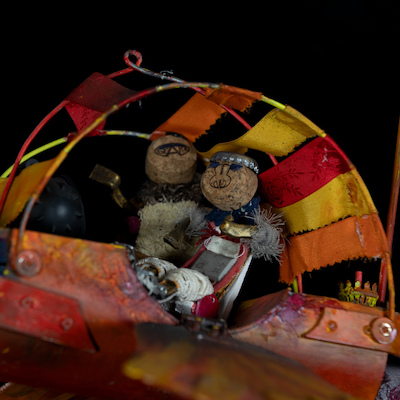
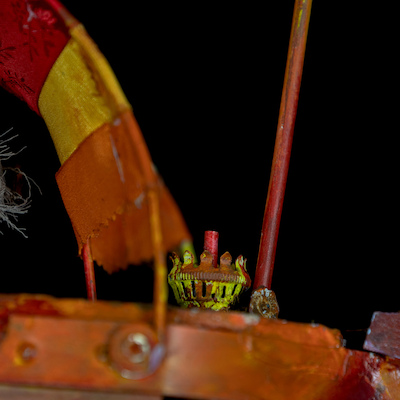


- OBJECT_HEIGHT : 300 mm ( 0'11" in )
- OBJECT_WIDTH : 450 mm ( 1'5" in )
- OBJECT_LENGTH : 620 mm ( 2'0" in )
- OBJECT_WEIGHT : 790 g ( 1.74 lb )
OBJECT_MATERIAL_EN :
volume | expanded PVC, wooddetails | brass and cork characters covered in various fabrics
painting | acrylic paint
joints | hinges
OBJECT_ARTISTS_EN :
- direction | Clara Ribeiro
- art direction | enVide neFelibata
- creation | Migvel Tepes
- built support | enVide neFelibata
OBJECT_DESCRIPTION_EN :
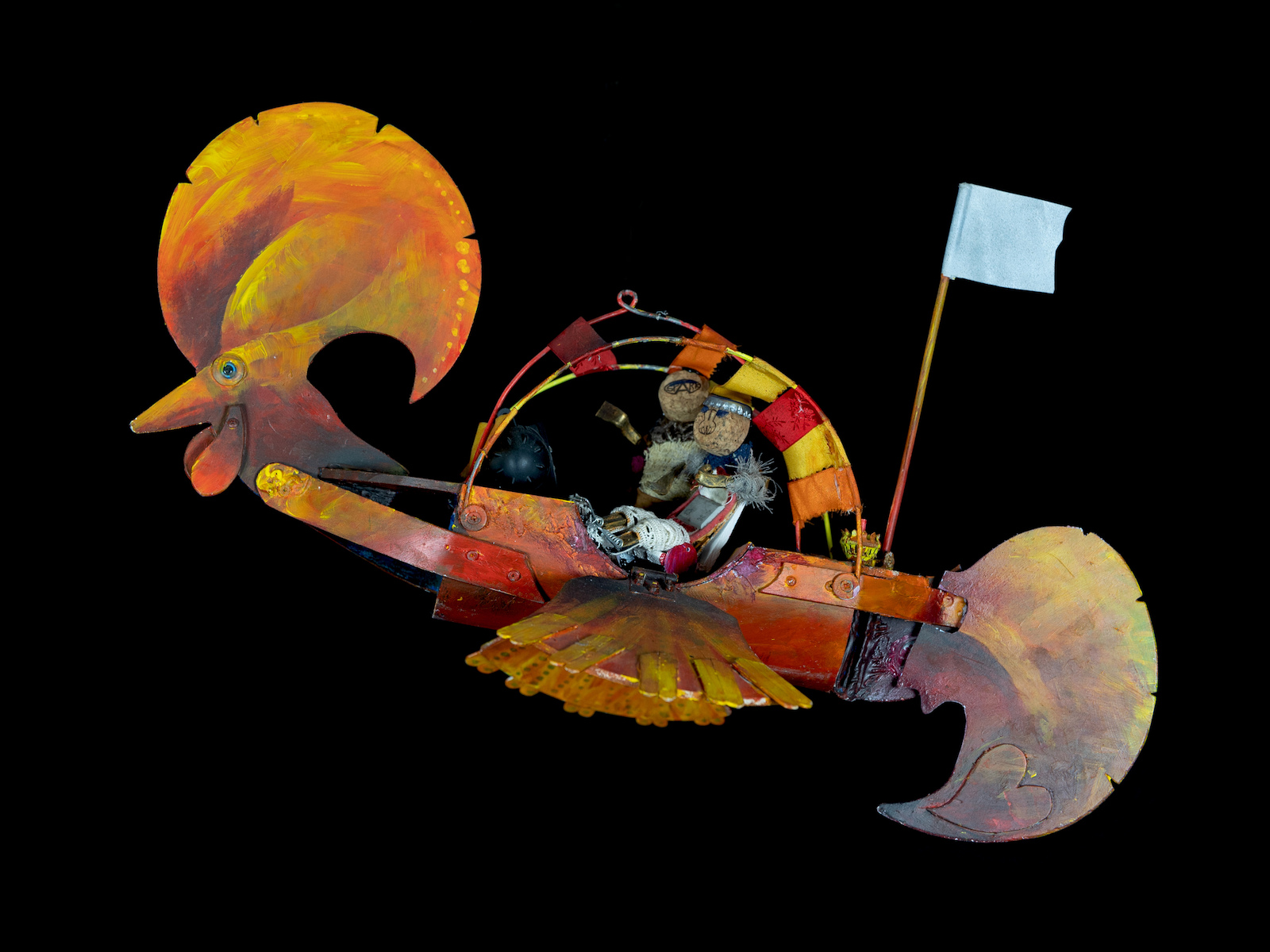
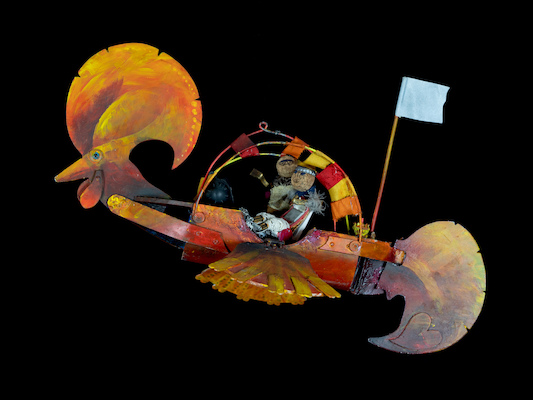
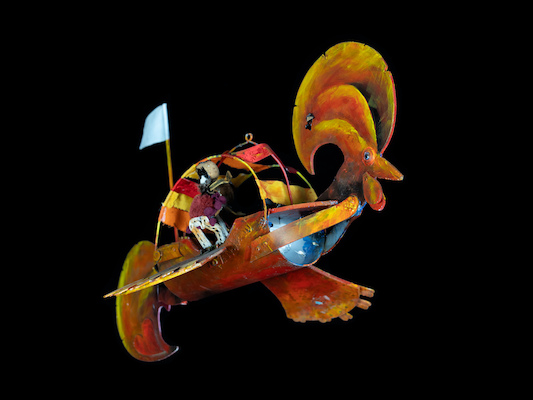
The Passarola is the design of an aerostat supposedly built between 1709 and 1720 and whose invention is attributed to Bartolomeu de Gusmão, a Portuguese priest and scientist.
The Passarola is a symbol of freedom, and in this show it allows Don Quixote and Sancho Panza to fly over the walls of Europe in the hope that they can be torn down.
It is a symbol of the realization of the dream and also of the liberty of the spirit and the passage to another state of consciousness.
The flight symbolizes the attempt to fight against all forms of intolerance and persecution.
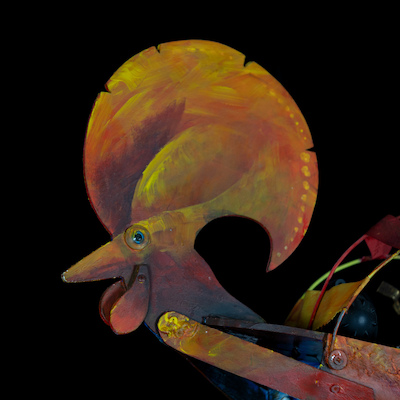
Our version is inspired by the design of the Barcelos rooster, erected as the greatest symbol of Portuguese identity, although the contradiction remains between its interpretation as a genuine expression of national arts and crafts or as an ideological construct promoted by the Estado Novo.
OBJECT_CONTEXT_EN :
Performed in 1733, “The Life of the Great Don Quixote de la Mancha and the Fat Sancho Panza” was António José da Silva's first play, “The Jew”. An ironic interpretation of the play criticizes justice and the “walls” that Europe erects.