archive-object-reference
REFERENCE : MTM.2011.0085.0251

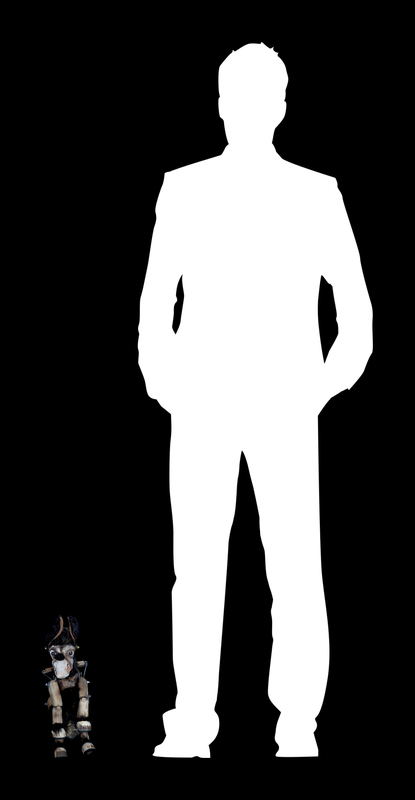
- OBJECT_HEIGHT : 340 mm ( 1'1" in )
- OBJECT_WIDTH : 145 mm ( 0'5" in )
- OBJECT_LENGTH : 390 mm ( 1'3" in )
- OBJECT_WEIGHT : 980 g ( 2.16 lb )
- OBJECT_REF : MTM.2011.0085.0251
- OBJECT_NAME_EN : Mira
- EVENT_NAME_EN : house of winds
- OBJECT_TYPOLOGY_EN : puppet / mixed technique / mixed technique
- OBJECT_DATE : 2011
- OBJECT_STORAGE_REF :
OBJECT_MATERIAL_EN :
body/volume | polystyrene, woodhead | polystyrene
hair | carpel, burlap
details | glass eyes
paint | acrylic paint
joints | steel rod
OBJECT_ARTISTS_EN :
- direction | Filipa Mesquita
- art direction | enVide neFelibata
- creation | enVide neFelibata
OBJECT_DESCRIPTION_EN :
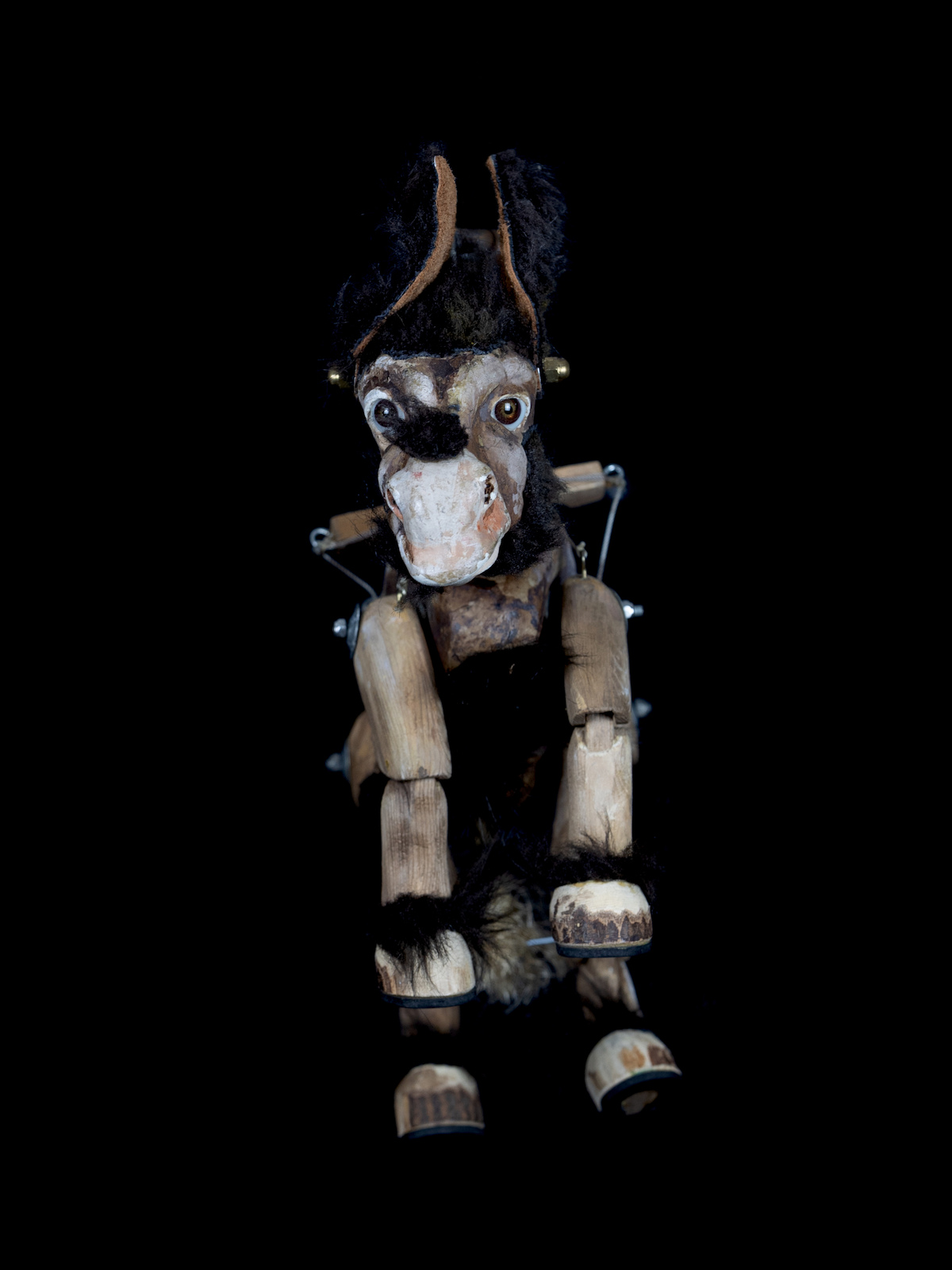
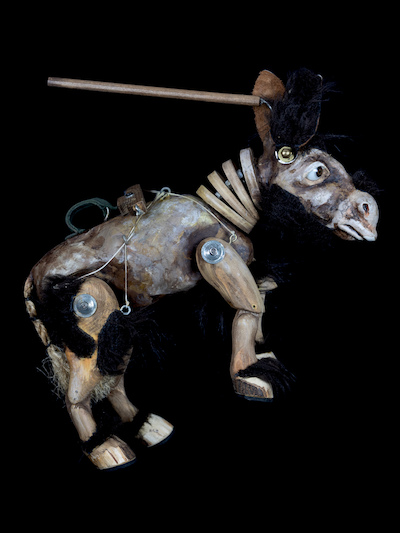
Let's start by describing the name of this character, Mira, which comes from the word mirandese, as a tribute to the animal that is protected in Portugal, the mirandese donkey.
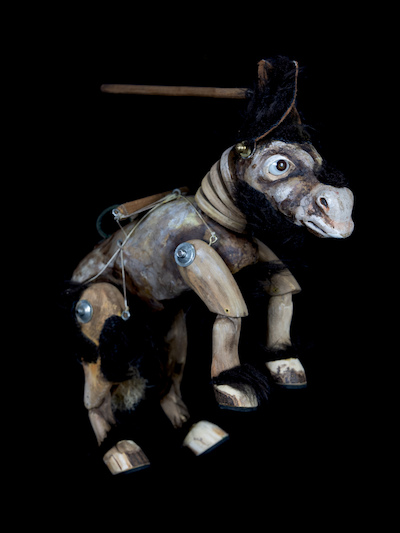
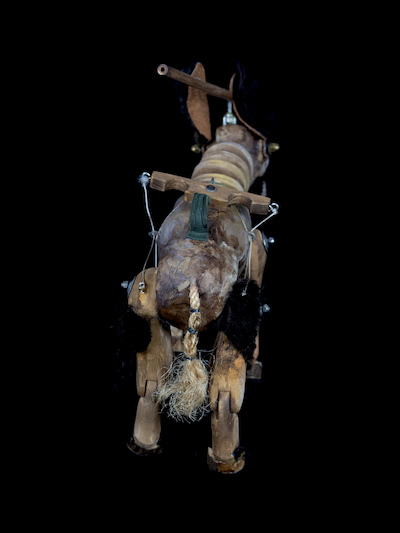
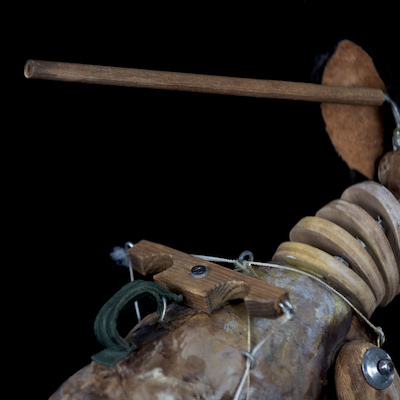
This puppet, sculpted from wood and polystyrene, has a mechanism on its back inspired by the controllers on traditional string puppets. This allows the four legs to move simultaneously in a realistic way, the movement of a hind limb is matched by the movement of a forelimb on the opposite side.
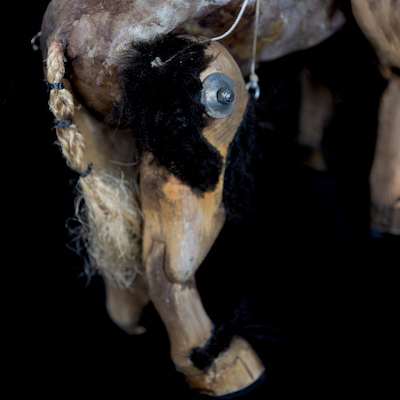
In addition, this puppet has a rod in its head that can be manipulated in conjunction with the structure of the puppet's back. It was intended that, unlike the other puppets in the show, this puppet should have a distinctive look. To achieve this, realistic glass eyes, commonly used in religious sculptures, were applied, giving it a distinctive human character that the viewer, not being able to detect this element, recognizes and gets closer to the character of the figure.
The puppet doesn't have speech, but it creates empathy with the viewer, either through its gentle and present side, or through its stubborn side, which gives it a docile and highly comical character. The puppet moves around the set, as well as transporting the other humanized puppets on its back.
OBJECT_CONTEXT_EN :
In an articulation of different national rural heritages, the integration of this animal, the donkey, in the show meets the dramaturgy. In the sense of an observation of a heritage that is becoming extinct to give way to a new territorial identity in constant transformation. It is also based on the idea that it is important to integrate heritage into the new transformation.